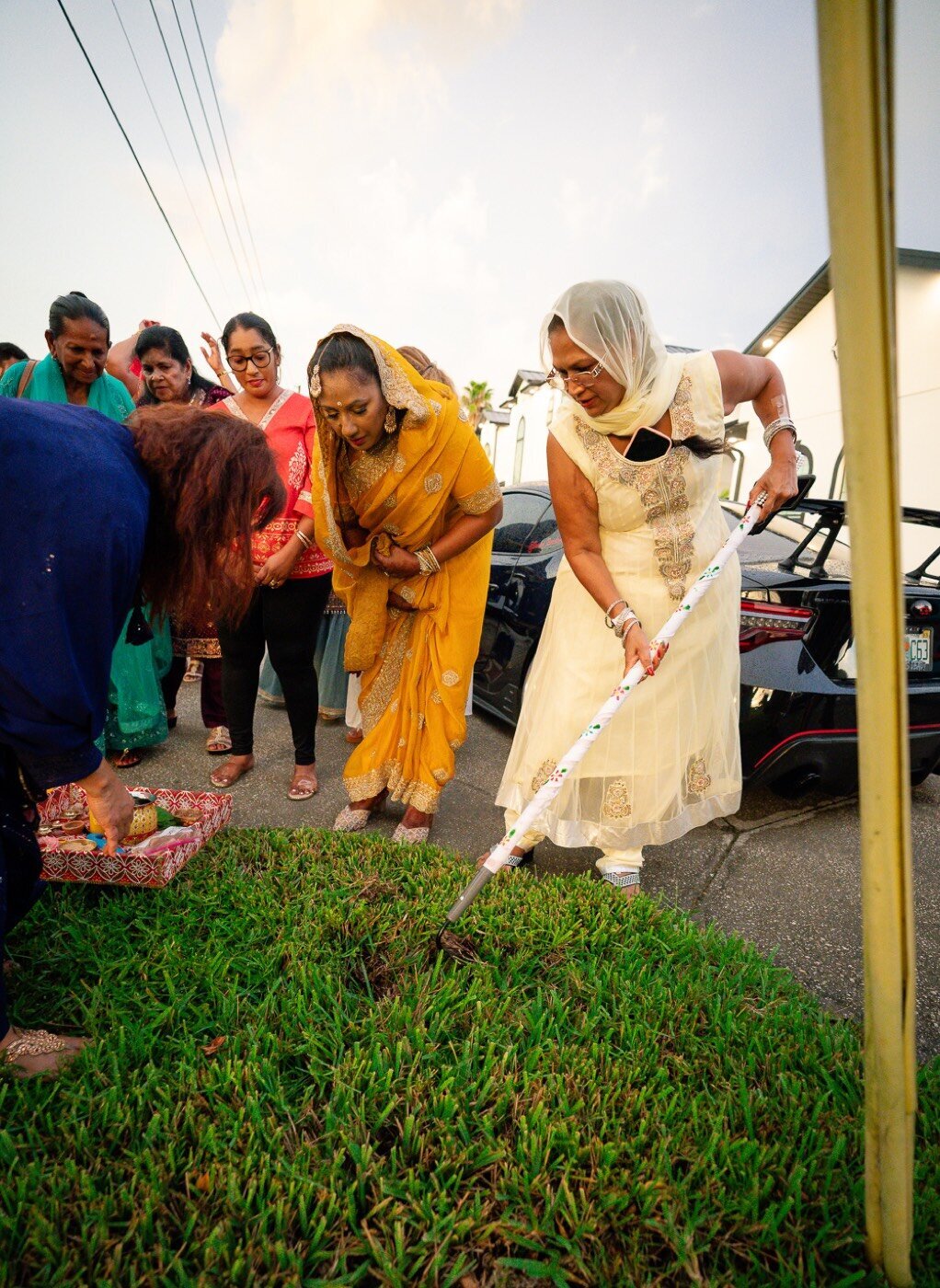
Short answer: a Hindu wedding day usually goes: getting ready, the baraat (the groom's arrival), the welcome and the jaimala (garland exchange), the ceremony at the mandap, lunch or dinner, the vidaai (the bride's goodbye), and then the reception. The ceremony alone can take 3 to 5 hours depending on your pundit (pandit), so the whole day often runs 10 to 14 hours.
Every family and every pundit does it a little differently. This is the general flow I see at most Guyanese, Trini and Indian weddings in Florida, with real times from the weddings I've worked.
A sample timeline
| Time | What's happening |
|---|---|
| 6:00 AM | Hair and makeup starts. Bride first. |
| 8:30 AM | Groom gets ready. Getting-ready photos for both sides |
| 10:00 AM | Baraat arrives with the tassa |
| 10:30 AM | Welcome of the groom and jaimala |
| 11:00 AM | Ceremony begins at the mandap |
| 2:00 to 3:00 PM | Ceremony ends. Family photos |
| 3:00 PM | Lunch: curry, rice, dhal |
| 4:00 PM | Vidaai |
| 6:30 PM | Reception: entrance, first dance, speeches, dinner, chutney and soca |
| 11:00 PM | Send-off |
Your times will shift with your pundit and your venue, but the order usually holds.
Want one team to plan and film your whole weekend? See the Marvelous Experience →
Each part, in plain English
Getting ready. Hair and makeup takes longer than anyone thinks. The bride goes first, so she's not the one running late.
The baraat. The groom (dulaha) arrives with his family and friends, dancing, with the tassa drums leading. It's one of the most fun parts of the day.
The welcome and jaimala. The bride's family welcomes the groom. The couple exchange flower garlands (jaimala or varmala), and the families have fun with it.
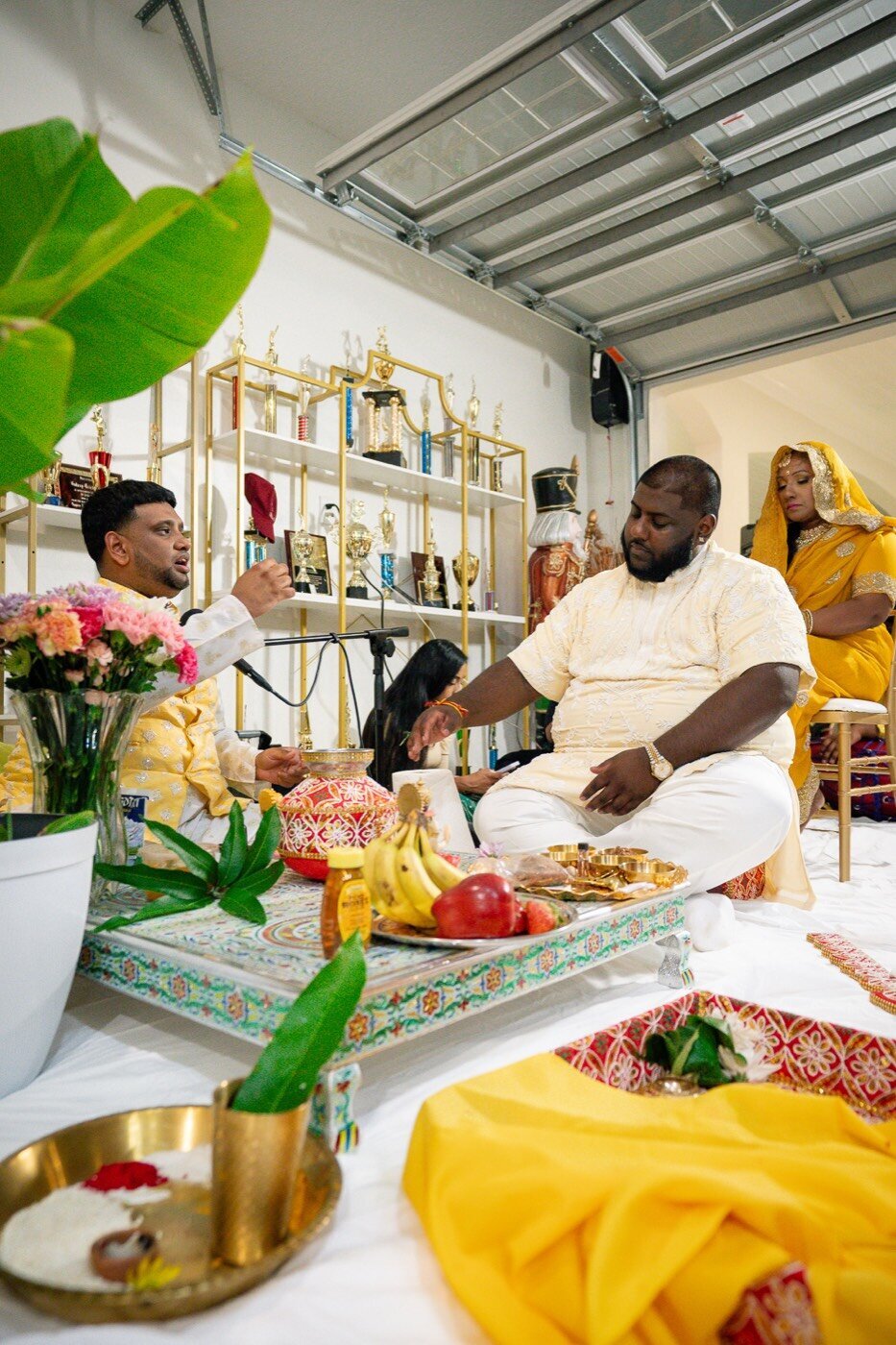
The ceremony (vivah sanskar). At the mandap, the couple sit before the sacred fire (agni) in the havan kund. The pundit leads the prayers, the bride's father gives her away (kanyadaan), the couple walk around the fire and make their vows, and the groom puts sindoor in the bride's hair. This is the heart of the day.
Lunch. Guests eat, often the curry and rice served on a leaf. If the ceremony runs long, feed guests during it.
The vidaai. The bride says goodbye to her family. It's emotional. Have tissues ready, and make sure your photographer is ready too.
The reception. Outfit change, grand entrance, first dance, speeches, dinner and a full dance floor.
Tips to keep the day on time
- Build in buffer time. Everything takes longer on a wedding day. (The 30-Minute Rule)
- Give every vendor the same timeline.
- Do the family photo list ahead of time.
- Have a coordinator run the clock, so your parents can enjoy it.
- Rehearse the baraat. Our lead planner, Cynthia, wants every couple to do a short walkthrough at the venue a few weeks before, with the venue coordinator, your planner and your photo and film team: "You have a venue, there's a street coming from the left or the right, different ways to enter the building. Which way are the cars entering? Where should the drone be? What time is it happening? Who's cueing who? What door is the family coming out of, and what door are they going back in? There literally needs to be a baraat rehearsal, because those details are huge for the wedding film."
- Set out the pundit's items before he arrives. "When the pundit gets there, he should just be grabbing the stuff and putting it where he wants. That shouldn't be happening the morning of."
Common questions
How long is a Hindu wedding ceremony? Usually 3 to 5 hours, depending on the pundit and the family's traditions.
What is the order of a Hindu wedding? Getting ready, the baraat, the welcome and jaimala, the ceremony at the mandap, lunch, the vidaai, then the reception.
What is the baraat? The groom's arrival with his family and friends, usually with music and dancing. In Guyanese and Trini weddings, the tassa drums lead it.