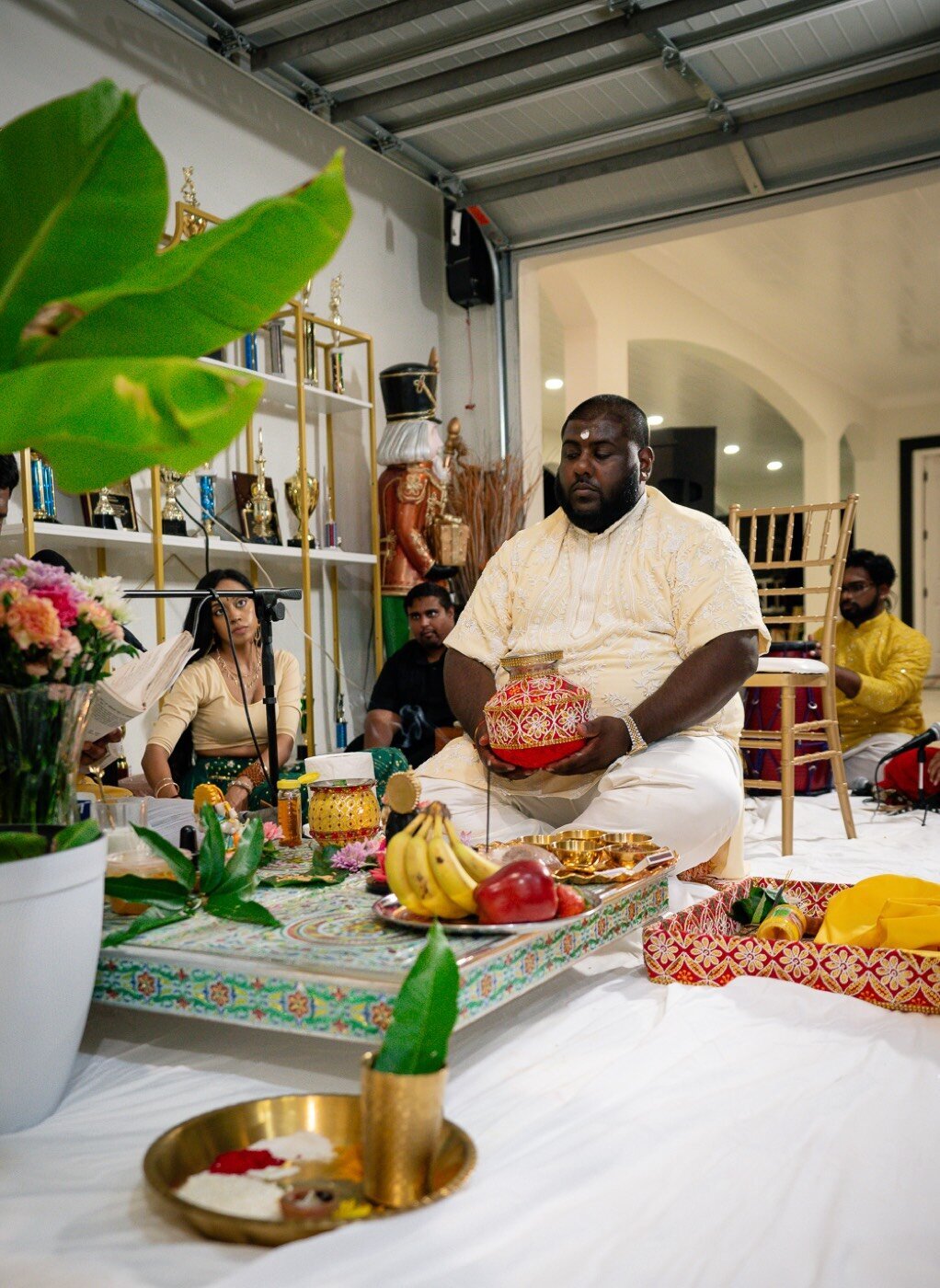
Short answer: plan it as three or four separate events, not one long wedding. Give each day its own timeline, its own vendor list and one person in charge. Lock your pandit (pundit) and your venue first, feed people on time, and let a coordinator carry the moving parts so the dulahin, the dulaha and their parents can actually be present.
I'm Guyanese, I grew up going to these weddings, and I've photographed and planned a lot of them since. Here's how I'd tell a friend to do it.
What a 3-day Hindu wedding usually looks like
Every family does it a little differently, and your pandit guides the rituals. But for a lot of Guyanese and Trini families in Florida, the weekend runs something like this:
- Day 1: the maticoor (matikor). The women's night. Prayers, the digging of the earth, songs, and the tassa drums leading everyone out. Then it turns into a party. Read What Is a Maticoor?
- Day 2: haldi and the night before. The haldi (the dye) at home, family cooking together, mehndi for the bride. Some families still call it cook night, because that's when the food for the wedding gets made.
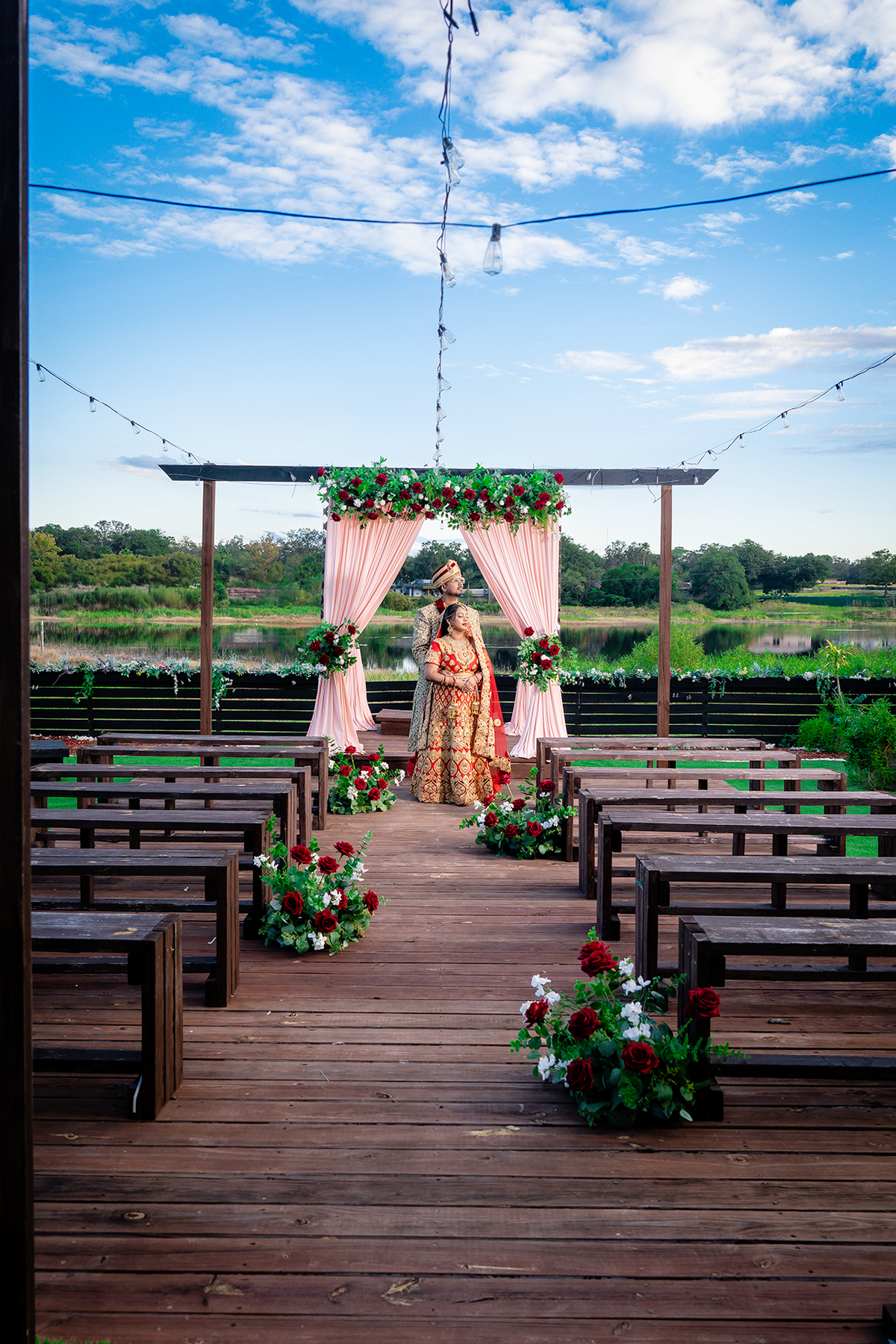
- Day 3: the wedding. The baraat comes in with the tassa, the jaimala (varmala), and then the vivah sanskar at the mandap: the agni and the havan kund, the vows, the walk around the fire, the sindoor. The ceremony can run 3 to 5 hours depending on your pandit. Then the reception.
- Day 4 (for many families): the kangan. The day after the reception, smaller and invite-only, with the games and the close family.
That's four days of setups, outfits, food and guests. That's why it gets stressful.
Want one team to plan and film your whole weekend? See the Marvelous Experience →

Step 1: lock the big three first
- Your pandit (pundit). Their schedule and their way of doing the ceremony shape everything else, including how long the day runs.
- Your venue, or venues. Is the maticoor at home or a hall? Is the ceremony and reception at the same place? Every location change adds time and a setup crew.
- Your coordinator. Book them early, before the vendors, so they can help shape the plan instead of fixing it later. (More on that in Do You Need a Wedding Coordinator for a Hindu Wedding?)
Step 2: give every day its own plan
Don't make one giant timeline. Make one per event:
- Who's hosting it (bride's side, groom's side, both).
- The guest list for that day.
- Vendors for that day: tassa group, DJ for the chutney and soca, decor, mandap, food, photo and film.
- Outfits: the lehenga or sari changes for the dulahin, the sherwani for the dulaha, and everyone else who's changing.
- One person in charge. Not the bride. Not the bride's mom.
Our lead planner, Cynthia, puts it this way: "These weddings are long because they're so rich in tradition. There are three days' worth of rituals, and they need to be done at certain times, in certain ways. When the plan is too general, families end up running around trying to get it all done." Her fix is a pre-meeting with the family, the pundit (pandit) and the coordinator before the maticoor (matikor), so every day has its own hour-by-hour plan, and some breathing room for the family.
Step 3: plan the food like it's its own event
Hungry guests are the fastest way to a stressful wedding. When the ceremony runs long and the food isn't ready, people feel every minute. Plan when the seven curry is served, who's serving it, and what guests eat while the ceremony is going. Your caterer and your coordinator need the same timeline.
Step 4: build in buffer, everywhere
Remember the 30-minute rule: anything that takes 5 minutes in real life takes 30 on a wedding day. In a Hindu wedding, that's doubled by outfit changes, family photos and a ceremony that doesn't watch the clock. Hair and makeup for the bride goes first. Every transition gets extra time. Read The 30-Minute Rule for Weddings.
Step 5: protect the moments you'll want on film
The baraat with the tassa, the jaimala, the parents during the kanyadaan, the walk around the agni, the first look at the reception. These happen once. When we film a Hindu wedding, we set our camera angles before the baraat arrives and before the entrance, so we're not chasing the moment. That only works when someone's running the timeline.
Step 6: decide who pays for what, early
With four events, a lot of family usually contributes. That's beautiful, and it's also where control gets messy. Decide early who's covering which day and who makes the final call. I learned this the hard way at my own wedding. (Who Pays for the Wedding Gets a Say.)
What it costs to capture all of it
Each day is a full shoot and a full edit. Our photo and film for a cultural weekend starts at $9,500, and pre-wedding nights like the maticoor, mehndi or haldi start at $2,000 for photo or $3,500 for photo and film. Coordination with Cynthia is custom, based on your days, guests and locations.
Common questions
How long does a Hindu wedding last? A Guyanese or Trini Hindu wedding often runs three or four days: the maticoor (matikor), haldi and the night before, the ceremony and reception, and the kangan. The ceremony alone can take 3 to 5 hours.
What happens on each day of a Hindu wedding? Usually the maticoor first, then haldi, mehndi and the food prep, then the baraat, jaimala and vivah sanskar at the mandap followed by the reception, and the kangan the day after.
How do you plan a multi-day Hindu wedding without stress? Treat each day as its own event with its own timeline, guest list and vendors, book your pandit and venue first, and hire a coordinator to run it.
Do you need a coordinator for a Hindu wedding? For a three or four day wedding, yes. Someone has to run the timeline across every event so the couple and their parents can be present.