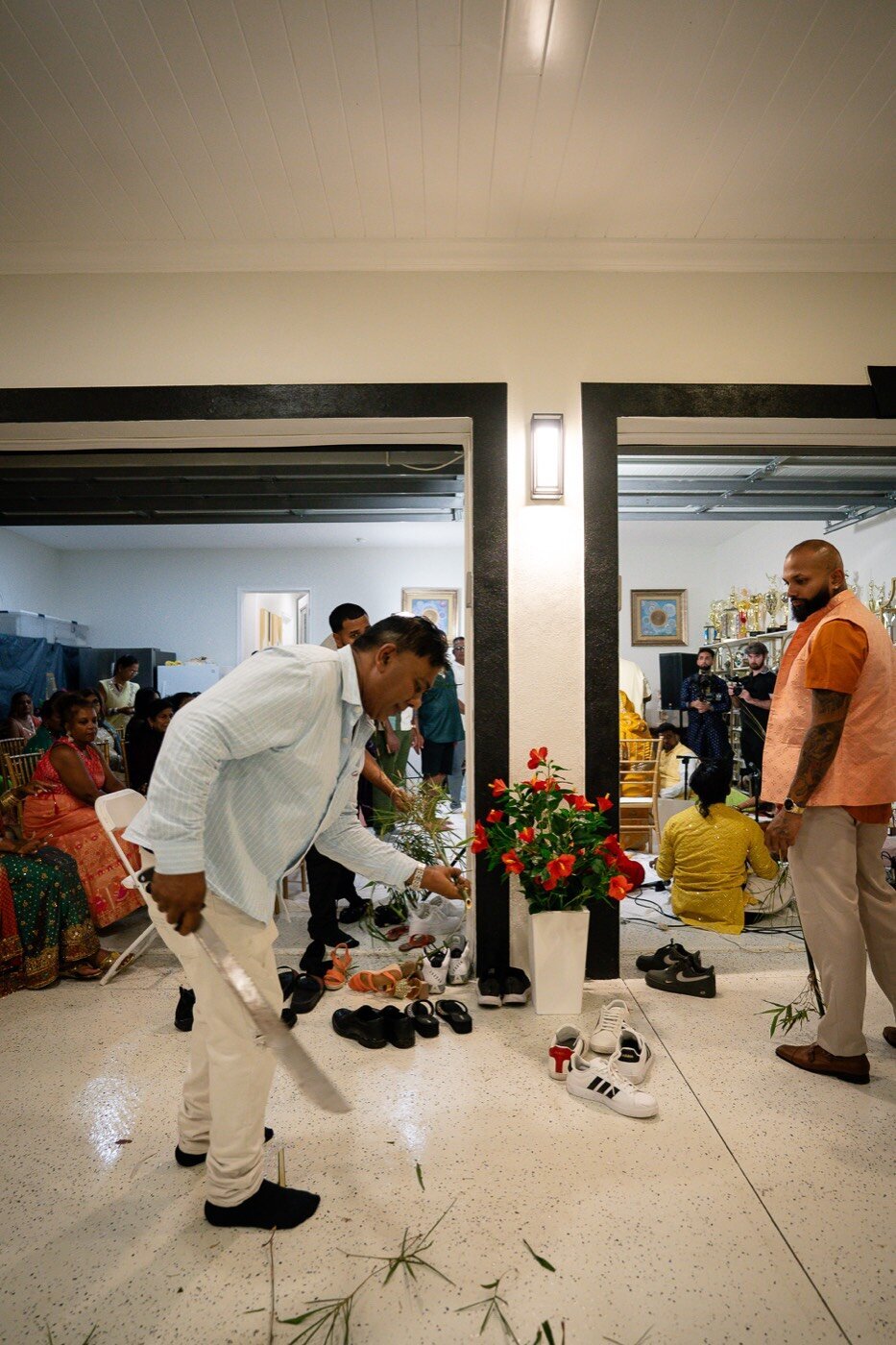
Short answer: the maticoor (matikor), also called dig dutty in many families, is the women's night before a Guyanese or Trini Hindu wedding. The women of the family gather, offer prayers to Mother Earth, and dig a small piece of earth while the drums play and the old songs start. Then the dancing takes over. It usually happens a day or two before the wedding, and each side of the family often holds its own. Your pundit (or pandit) and the elders guide the prayers. Everything after that is pure celebration.
I grew up with these nights. The tassa or the dholak starting up, the aunties singing songs nobody writes down, everybody covered in color by the end. If you ask a Guyanese or Trini bride what she remembers most about her wedding weekend, the maticoor (matikor) is usually near the top.
What happens at a maticoor (matikor)
Every family does it a little differently, and every pundit (pandit) guides it in the tradition they were taught. Most nights follow this shape:
- The gathering. The women of the family and close friends meet at the home, usually in the evening.
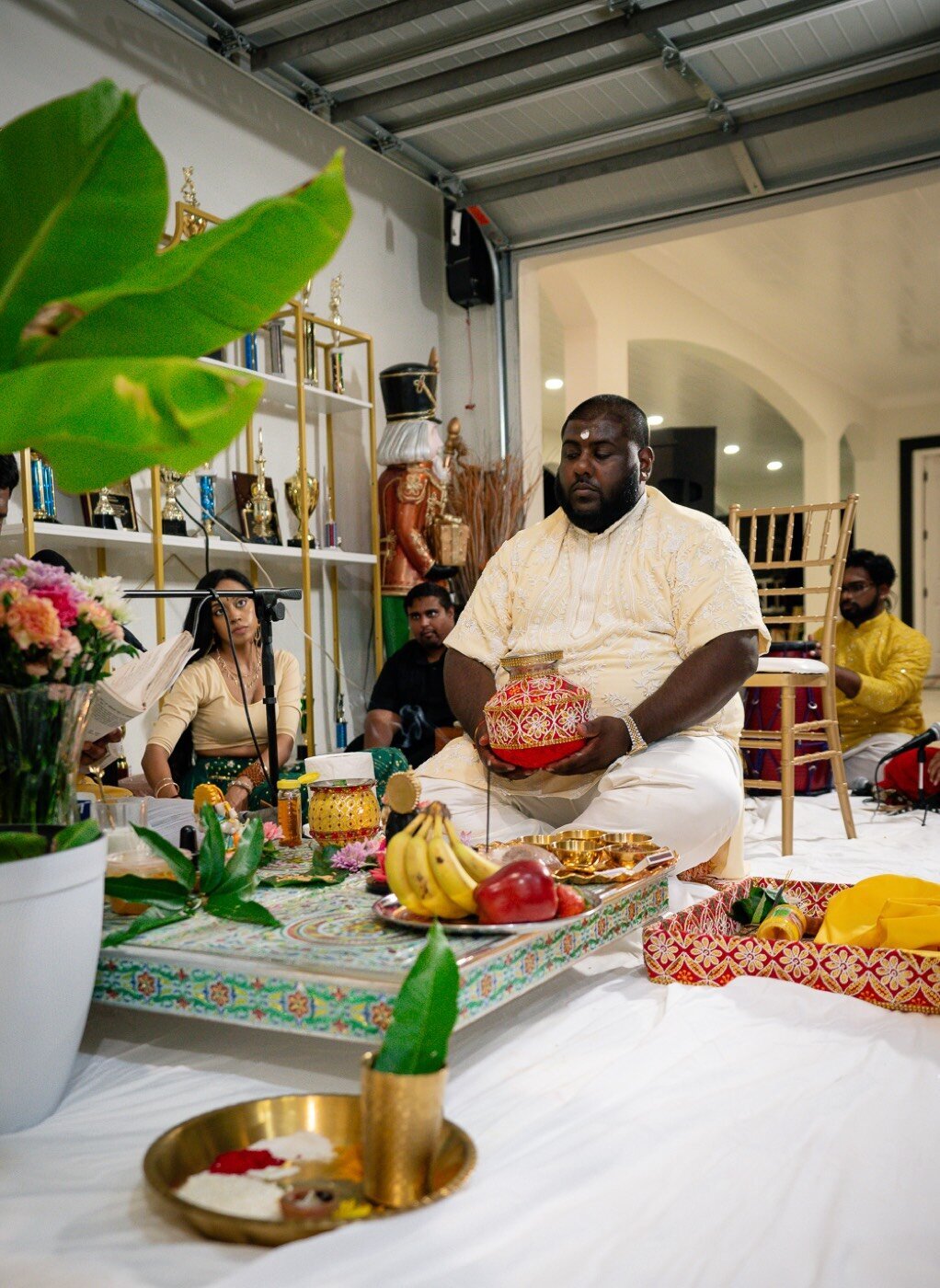
- The prayers. A short puja to Mother Earth, with offerings, led by your pundit (pandit) or an elder.
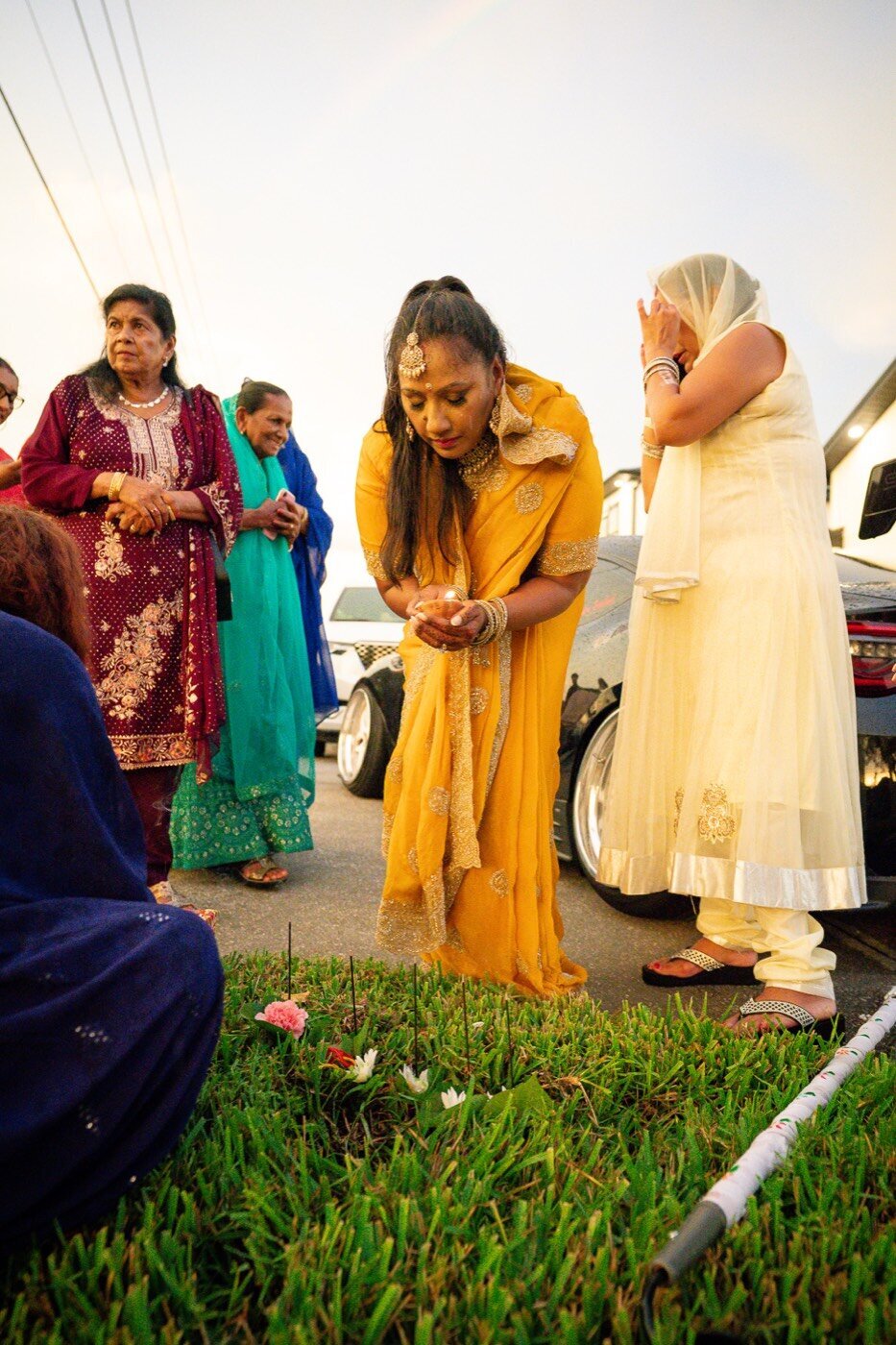
- The walk and the digging. The women go out with the drummers to a spot nearby, offer prayers there, and dig a small piece of earth. That earth is carried back for the wedding rituals.
- The songs. Traditional maticoor (matikor) songs, passed down by the aunties and the grandmothers. This is the part families miss most when nobody records it.
- The dancing. Once the rituals are done, the drums get louder and the night turns into a party.
Planning a pre-wedding night? See pre-wedding night coverage →
Who goes
Traditionally it's a women's night: the bride or groom's mother, aunties, sisters, cousins and close friends. Many families now invite more people to the dancing that follows. The bride's side and the groom's side often hold separate maticoor (matikor) nights at their own homes.
How long it runs
Plan for about three to five hours. The prayers and the walk take the first hour or so; the singing and dancing can go late. If you're booking photo or film, cover the prayers and the walk at a minimum, and stay for the first hour of dancing. That's when the best moments happen.
What to plan
- Time it around the drummers. The tassa or dholak sets the energy for the whole night. Confirm their arrival time first.
- Choose the spot for the digging ahead of time. Somewhere close, safe to walk to, and easy to light if it'll be dark.
- Light the house and the yard. Phones and cameras struggle in the dark. A few warm lights make the photos.
- Ask an elder to lead the songs. If the grandmothers know the old songs, make sure they're there and comfortable.
- Decide who stays for the dancing. Some families keep the rituals small and open the dancing to everyone.
- Plan outfits for color. Bright colors photograph beautifully at night, and many families wear something they don't mind getting messy.
- Set out everything the puja needs before anyone walks out. Cynthia sees the same pause at almost every Hindu event: "Someone says, 'Oh, we need a cup of milk.' That should already be set up, so when the pundit gets there, he's just grabbing it and putting it where he wants."
- Plan the cook night too. In many Guyanese and Trini families, the cook night follows close behind the maticoor (matikor), with the aunties cooking for the wedding and the music still going. If you want it captured, tell your photo and film team ahead of time.
What to capture
- The elders' hands during the prayers and the offerings
- The walk out with the drums
- The moment the earth is dug and carried back
- The aunties singing, faces and voices, since a short video clip here becomes a family keepsake
- The first dance after the rituals and the bride or groom pulled into the middle
- Wide shots of the whole yard or house, so you remember who was there
Maticoor (matikor) photo and film with us
We photograph and film maticoor (matikor) nights across Orlando and Central Florida, quietly during the prayers and right in the middle of the dancing.
- One pre-wedding night: photography from $2,000, photo + film from $3,500, with a sneak peek within 7 days.
- The whole weekend: our cultural weekend photo + film from $9,500 covers the maticoor (matikor), haldi or mehndi, the ceremony and the reception with one team.
- Planning help: Cynthia can build the timeline for every night, so nobody in your family has to run the schedule.
See everything included on our mehndi, maticoor (matikor) and haldi night page, or read the guide to every event of the wedding weekend.
Common questions
What is a maticoor (matikor)? It's a pre-wedding night at Guyanese and Trini Hindu weddings where the women of the family pray to Mother Earth, dig a small piece of earth with the drums playing, and then sing and dance late into the night.
Is it spelled matikor or maticoor? Both. Families spell it matikor, maticoor or maticore, and many simply call it dig dutty. It's the same night.
When is the maticoor (matikor) held? Usually a day or two before the wedding ceremony, often on the Friday of a weekend wedding. Your pundit (pandit) and your family will set the exact day.
Do I need a photographer for the maticoor (matikor)? If you want the prayers, the songs and the elders remembered, yes. It happens once, it's often at night, and it's the event families most often wish they had recorded.