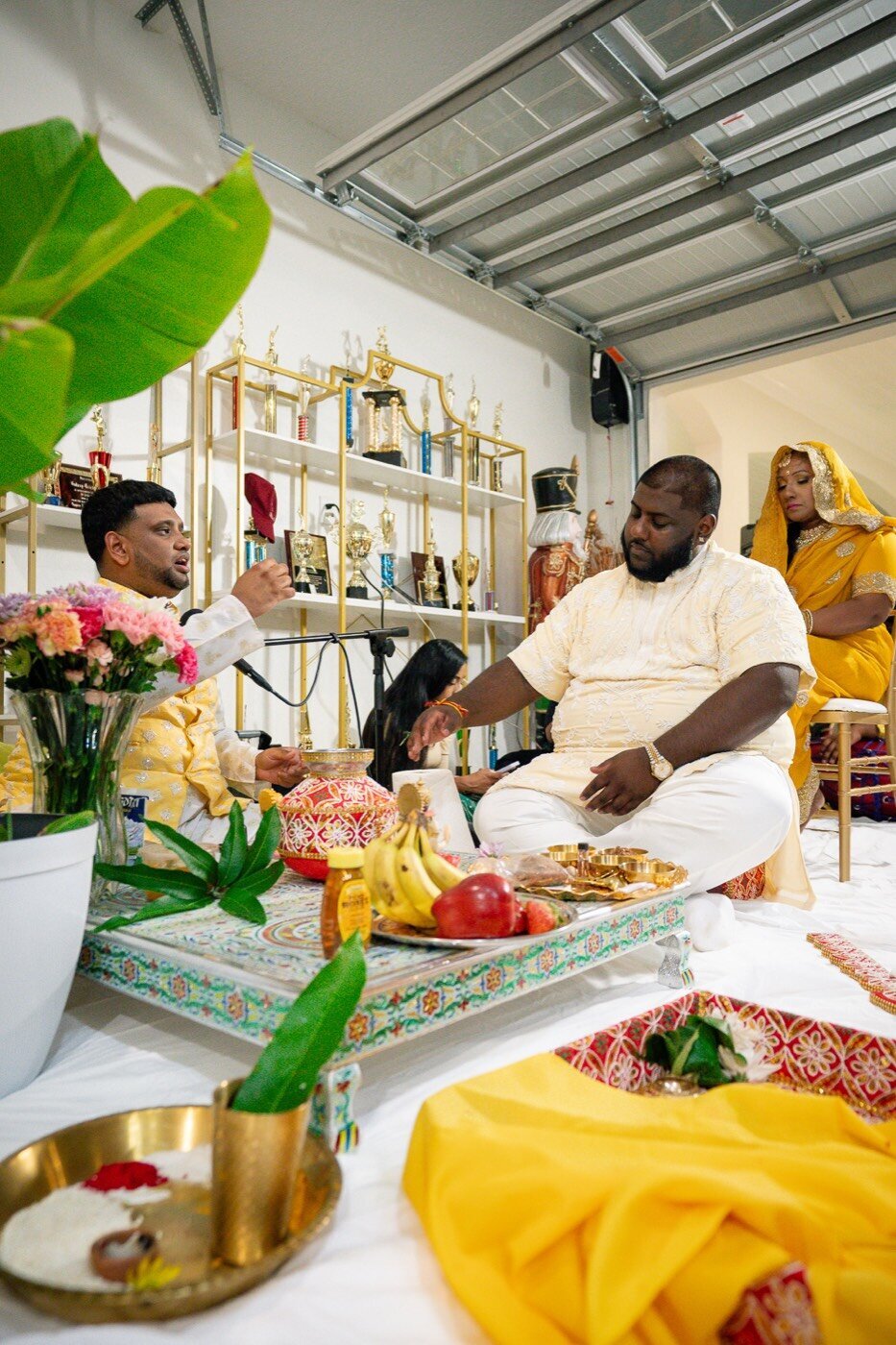
I grew up with these weddings. The prayers at home days before, the henna and the music, the drums at the maticoor (matikor), the turmeric on everybody's hands by the end of the haldi, the whole family crowded around the fire. Whether your family's roots are in Guyana, Trinidad or India, a Hindu wedding isn't one day. It's a weekend of moments, and most of them only happen once.
Every family does it a little differently, and every pundit (or pandit) guides the rituals in the tradition they were taught. That makes choosing your pundit one of the most important decisions of the weekend, so choose someone whose way feels right for your family. Your pundit sets the order and the timing, and the rest of us follow their lead. This guide walks through the events most families plan, so you can map out your weekend, and so whoever films it knows what's coming next.
Before the wedding: every event families plan
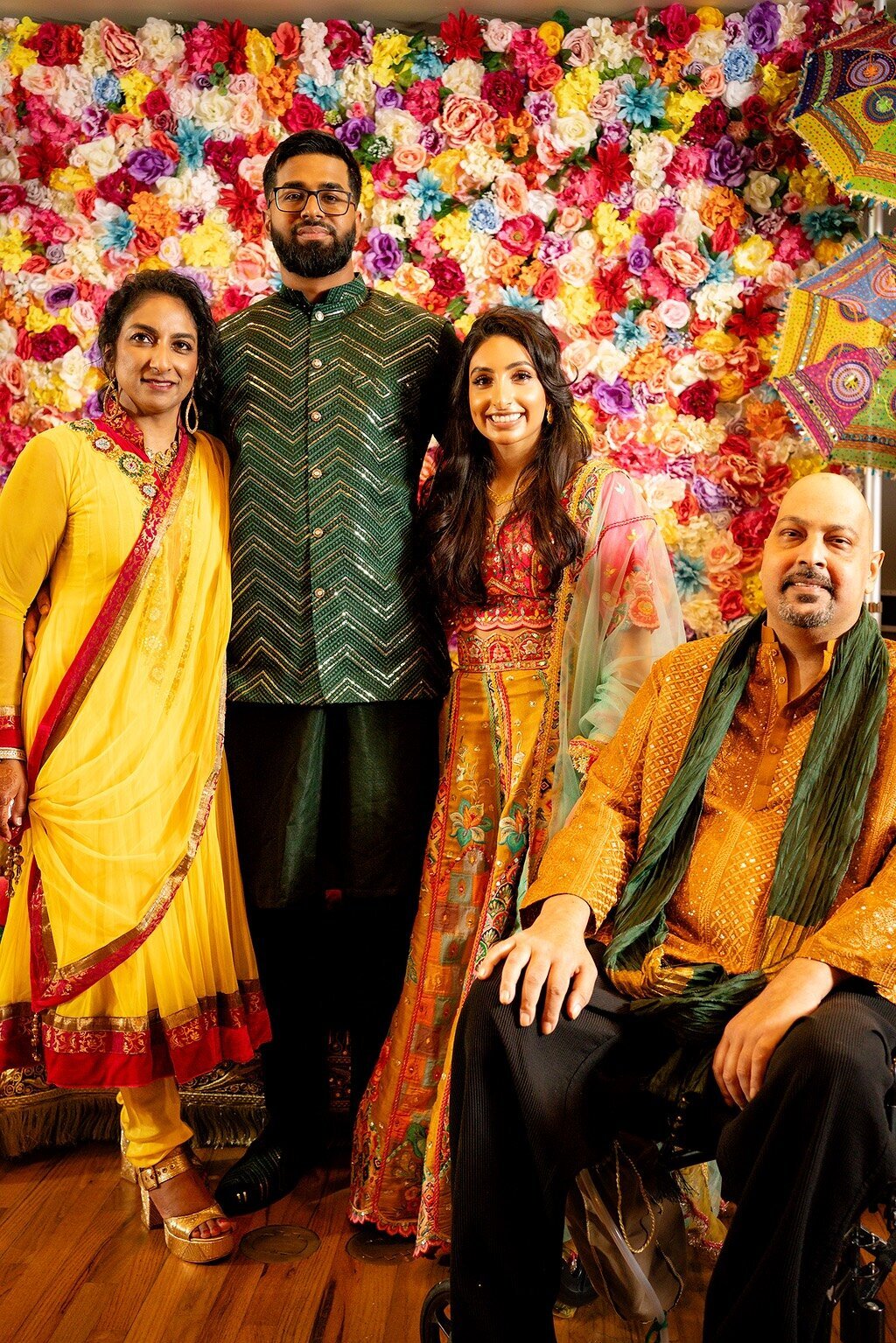
Not every family does all of these, and the names change from home to home. Here are the pre-wedding celebrations we're asked about most, from both sides of the ocean.
- Roka and sagai (the ring ceremony): the families make it official, often with blessings, gifts and the exchange of rings.
- Tilak: the bride's family visits the groom's home to bless him and welcome him into the family.
- Ganesh puja: prayers to Lord Ganesh to clear the way, often the first puja of the whole celebration.
- Grah Shanti: prayers for peace and blessings before the wedding (more below).
- Maticoor (matikor): the women's night of prayers to Mother Earth, drums and dancing (more below).
- Mehndi: henna for the bride, music and her closest people around her.
- Sangeet: a night of music, dancing and family performances.
- Haldi (the dye): turmeric for the bride and groom (more below).
- Chooda: in many Punjabi families, the bride receives her red and white bangles from her mother's brother.
Each one is its own set of moments. Tell us which ones you're having, and we'll plan the coverage around them.
With this many events, something will go wrong somewhere. Our planner Cynthia's advice: "Think about it ahead of time. Pack an emergency bag. Have a right-hand person next to you. If it's not your planner, give each person a distinct role, so you know who to call for help."
Want one team to plan and film your whole weekend? See the Marvelous Experience →
Days before: the Grah Shanti
The Grah Shanti (also written graha shanti) is a puja for peace and blessings before the wedding. The pundit or pandit leads prayers to the nine planets, the havan fire is lit, and the bride's and groom's families each hold their own, usually at home with the people closest to them. For many families, this is the moment the wedding really begins.
What to capture: the setup and the offerings, the pundit guiding the family, the parents and grandparents seated around the fire, the smoke and the light, and the quiet faces during the prayers. It's often indoors and intimate, so it needs someone who can move without disturbing the puja.
Cynthia, our lead planner, sees the same gap at almost every Hindu wedding: "Communication between the pundit and the family is the missing piece. There's always a pause before things start, because someone says, 'Oh, we need a cup of milk.' That should have been sorted out long before. When the pundit gets there, everything he needs should already be set out, so he's just picking it up and putting it where he wants." Get your pundit's (or pandit's) list early, and give it to one person to set up.
The night it gets loud: maticoor (matikor)
Maticoor (Matikor), also spelled maticoor (and called dig dutty in many families), is one of the best nights of the weekend. The women of the family gather, offer prayers to Mother Earth, and dig a small piece of earth while the drums play and the songs start. Then the dancing takes over. Each side of the family usually holds its own.
What to capture: the prayers, the digging, the older women leading the songs, the drummers, and the dancing that follows. It's often outdoors or in a yard as the light goes, so it needs someone who can work in low light without a big flash in everyone's face. Some families want parts of it kept private. Ask your pundit and your family first, and tell your photographer.
In a lot of Guyanese and Trini families, the cook night comes right alongside the maticoor (matikor): the aunties and uncles cooking the seven curry, the dhal and the rice for the wedding, with the music going late. If you want those moments remembered, tell your photo and film team ahead of time. Some of the best family photos of the whole weekend happen around the pots.
Haldi: the yellow day
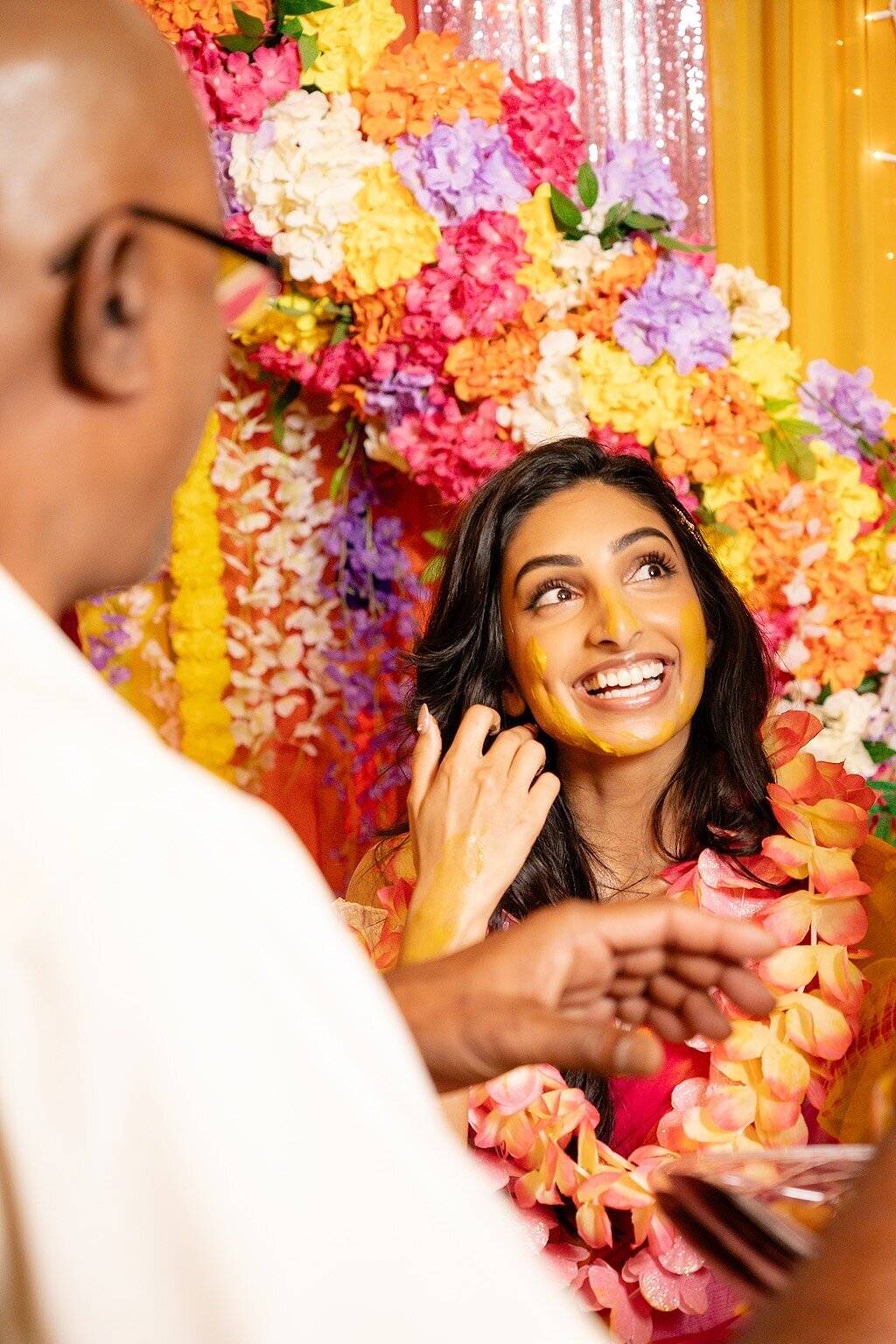
Haldi (some families call it the dye, or hardi) is when turmeric paste is applied to the bride, and to the groom at his home, to bless them and make them glow for the wedding. Cousins, aunties and grandparents all take a turn. It's loud, yellow and full of laughter, and nobody leaves clean.
What to capture: the turmeric going on, the faces of the people putting it on, the hands, the laughter, the moment someone gets the groom when he isn't looking. Daylight is your friend here, so plan it earlier in the day if you can.
Mehndi and sangeet nights
At the mehndi, henna is drawn on the bride's hands and feet while the music plays, and the hidden name of the groom somewhere in the design is a tradition in many families. The sangeet turns into a full night of songs, choreographed dances and family performances, and it's often the loosest, funniest night of the weekend.
What to capture: close-ups of the henna, her hands and her friends around her, the performances from the front row, and the aunties who take over the dance floor. These are some of the most shared photos and clips of the whole wedding.
The wedding day: under the maro or mandap
The ceremony takes place under the maro or mandap, built and decorated for the day, at home, at a mandir or at a hall. The groom arrives with his family, often with tassa or dhol, and is welcomed. Then come the rituals your pundit or pandit leads: the giving away of the bride (kanyadaan), the offerings of parched rice with her brother, the walk around the sacred fire (the pheras, or bhanwar), and the sindoor that marks her as a married woman. Many brides start in yellow and change into red partway through.
What to capture: the arrival, the welcome, her father's face during the kanyadaan, the brother's part in the rice offering, each round of the fire, the sindoor, and the outfit change. A ceremony can run two hours or more. Ask for someone who knows when each moment is coming, so nobody is changing a battery during the sindoor.
The reception and the goodbye
Speeches, food, chutney, soca and Bollywood, the first dance, and the moment the whole room gets up. Then the vidaai, the goodbye, which is usually when the tears come.
What to capture: the entrance, the speeches, the dance floor at its fullest, the grandparents dancing, and the goodbye.
After the reception: the kangan
For many Guyanese and Trini families, a wedding is a four-day celebration: the maticoor (matikor), the wedding day, the reception, and then the kangan (kangana) the day after. The kangan is smaller and by invitation only. The groom's parents, or the couple themselves, ask their closest family to come back to the house. The couple sit together to untie the threads tied on their wrists during the wedding, the family teases them through every knot, and there are games, food and music. Many East Indian families play a similar game, kangana khelna, searching for a ring in a bowl of milk.
What to capture: the knots, the laughing, the teasing from the cousins, and the couple, finally relaxed and married. It's often the most candid hour of the whole weekend, and families who skip filming it usually wish they hadn't.
How long should coverage be?
| What you're planning | What we suggest |
|---|---|
| Ceremony and reception only | One-day photo + film, from $6,500 |
| Pre-wedding events (Grah Shanti, maticoor (matikor), mehndi, sangeet or haldi), the ceremony and the reception | Cultural weekend photo + film, from $9,500 |
| All of the above, plus someone running the timeline | The Marvelous Experience (coordination, photo and film), from $10,000 |
Want the kangan or another event covered too? Tell us, and we'll add it to your quote. Every package starts with a 25% retainer, and the balance is due 30 days before the wedding. Getting married in Trinidad, Guyana, India or anywhere else? We travel, with travel quoted for your trip.
Cynthia's advice for a weekend like this: "Have a pre-meeting with the family, the pundit and the coordinator, and build an hour-by-hour, minute-by-minute schedule. Nothing ever goes 100% as planned, but when the plan is that general, once things start running late it gets even worse." Then build in breathing room. "The pundit has to check all the boxes to marry you properly in your tradition. So how can we check all these boxes and still make this experience enjoyable?"
Six questions to ask before you book anyone
- Have you filmed a Grah Shanti, a maticoor (matikor) and a ceremony under a maro or mandap before? Can I see the full film, not just a highlight?
- Will the same team be there every day of the weekend?
- How do you work around the pundit or pandit during the puja?
- How do you handle a dark hall or a yard at night?
- Do photo and film come from one team, or two companies?
- When do we get something to share? We send a 60-second teaser within 7 days of the wedding.
Where we've filmed
We've filmed weddings and celebrations at halls and venues across Central Florida, including Gabby's Banquet Hall in Clermont and The Sterling in Minneola. If your venue isn't on our list yet, we'll scout it with you before the day.
Book photo + film for any 2027 date and your engagement session is on us. It's the best way to get comfortable in front of the camera before the weekend.